
A Real Day at Basecamp:
What does a day at an Island Expeditions basecamp actually feel like? It begins with fresh salt air and the rhythmic sounds of the Caribbean, moves between guided adventure and unhurried island time, and usually ends with good food, engaging conversation and more stars than you remembered existed.
There is no rigid timetable at Glover’s Reef or Lighthouse Reef. Wind, weather, water conditions and the interests of the group shape each day’s plan. That flexibility is part of the plan in such a remote marine environment. Still, basecamp days have a natural rhythm. Here is how one might unfold.
The day at a glance
| Part of the day | What it may include |
| First light | Coffee, an early swim, a beach walk or optional sunrise yoga on select departures |
| Morning | Breakfast, guide briefing and a guided snorkel, kayak, sail or paddleboard session |
| Midday | Back to camp for a fresh lunch, gear reset and a hammock siesta or quiet island time |
| Afternoon | A second guided outing shaped by conditions and the group’s interests |
| Sunset | Happy hour, snacks, stories and time to watch the sun go down over the reef |
| After dark | Dinner, cultural or nature talks, and occasional night walk or night snorkel |
First light and first coffee
You wake beneath canvas in a walk-in tent cabana, on a raised wooden platform with a proper bed beneath you and the sea close enough to hear. There is no air-conditioning humming in the background. Instead, there is the breeze, the rustle of palms and the changing colour of the water outside.
Some guests head straight for the shoreline. Others walk to the central pavilion and wrap both hands around the first coffee of the day. An early swim or a quiet walk to the end of the dock overlooking the turquoise water is a popular start. Basecamp is active, but it is not a boot camp. You get to pick and choose how to enter the day, and how the day unfolds..
Breakfast and the daily plan
The conch blows, and breakfast gathers everyone in the open-air dining pavilion. Depending on the day, the table may hold eggs, tropical fruit, fresh baking, refried beans or warm fry jacks. Coffee gets topped up, masks and fins dry nearby, and the guide team begins reading the conditions beyond the caye.
This is where the day’s outline takes shape. The guides consider wind, tides, visibility and the abilities and interests of the group before presenting the options. Perhaps the morning is best for a patch-reef snorkel. The calm lagoon invites a longer paddle, a sea-kayak sail or a stand-up paddleboard session. Plans stay flexible because the wind, waves and reef, not the clock, has the final word.
The morning belongs to the water
After a gear check and safety briefing, the group heads out. Beginners receive instruction, and returning paddlers or confident snorkelers can keep building their skills. Belizean guides do more than lead the route. They help you notice what is easy to miss: the shape of a coral colony, the movement of a ray over sand, the habits of a reef fish or the way the current changes along an atoll edge.
At Glover’s Reef, the morning might unfold among the atoll’s many patch reefs encasing its sheltered turquoise lagoon. At Lighthouse Reef, it could begin with walk-in snorkeling from Half Moon Caye or an outing by kayak or motorboat. No two snorkel spots look exactly the same, and that variety is one reason the days never feel repetitive.
Lunch and a hammock
Back at camp, wet gear is rinsed and set out to dry while lunch appears in the pavilion. Meals are freshly prepared and may blend Belizean home cooking with familiar international dishes. There might be rice and beans, grilled meat or fish, vegetables, fruit and something baked that disappears faster than expected. Dietary needs can be accommodated when the team knows about them in advance.
Then comes one of basecamp’s most underrated traditions: the hammock siesta. Read a few pages. Watch the water. Talk with another guest. Fall asleep for twenty minutes and wake without knowing whether it was ten minutes or an hour. This pause is not wasted time. It is what makes the second half of the day feel inviting rather than scheduled.
An afternoon shaped by the reef
The afternoon offers another guided activity, often different from the morning. A snorkel may give way to paddleboarding, hand-line fishing or kayak sailing. A paddle may lead to a beach, a reef crest or another patch of coral chosen for the day’s conditions. All guided sessions are optional; staying back, swinging in a hammock with a good book is an accepted basecamp activity.
On a Lighthouse Reef day, the headline adventure might be the Aquarium, known for its abundance of fish and coral formations. The return can include a drift snorkel along Half Moon Wall. You float at the surface while the current carries you over the atoll’s underwater edge, with your guide nearby and the reef unfolding below. It is less about swimming hard than relaxing, looking and letting the water do some of the work.
On another day, the memorable moment may be much smaller: a spotted eagle ray crossing beneath a kayak, a school of fish turning as one, or the sudden quiet after everyone slips below the surface. Basecamp days are full of activities, but the details are what tend to stay with you.
The golden hour at camp
By late afternoon, the group returns to camp. There is time for a freshwater shower, dry clothes and a cold drink before happy hour. Snacks appear, stories from the day get better with each retelling, and strangers who met only a few days ago begin to feel like a small island community.
The pace slows with the light. Someone may point out a bird overhead or movement in the shallows. Cameras come out for the sunset, then are often put away again.
Dinner under an open sky
Dinner is generous and well earned. Camp cooks prepare a mix of Belizean and international food using fresh vegetables, tropical fruit, grilled meats, freshly caught seafood when available and in season, and homemade baking. A bottle of Marie Sharp’s hot sauce is rarely far away. The meal is also the social centre of the evening, with guides and guests exchanging stories and learning more about Belize beyond the reef.
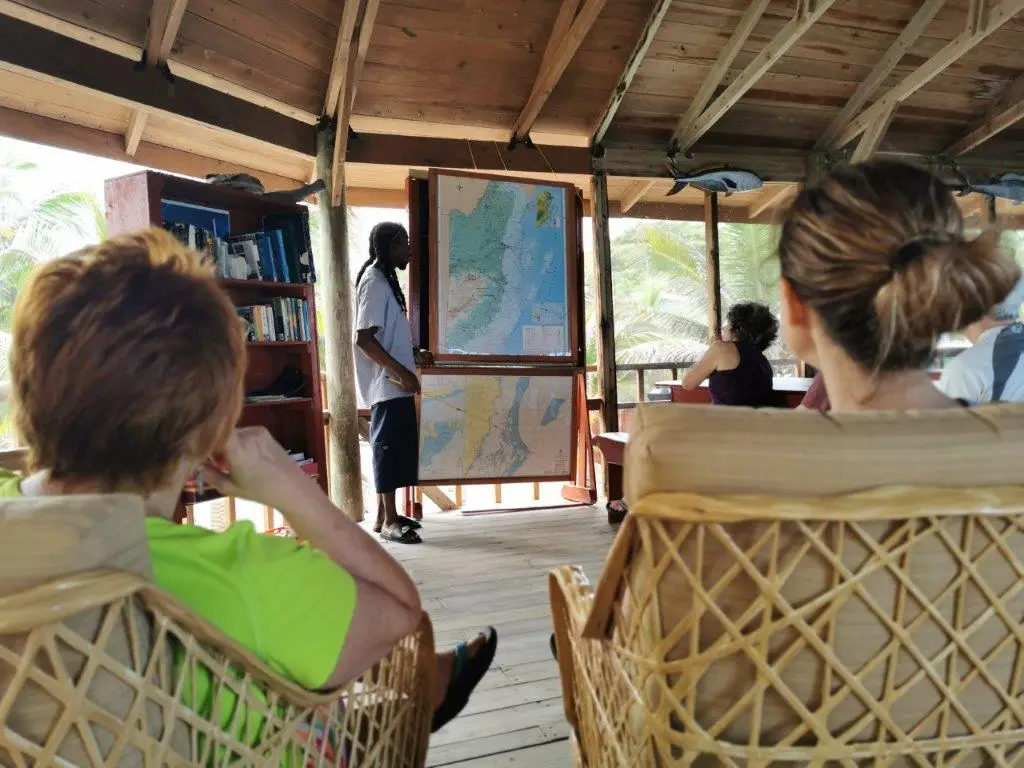
Some evenings include a presentation about marine ecology, Belizean history or local culture. A night snorkel or an intertidal walk that reveals the creatures that emerge after sunset. Other nights remain beautifully simple: conversation, a drink, the sound of the sea and a sky free from city light.
Back to the tent cabana
Eventually, the group drifts away from the pavilion. Your tent cabana is simple, comfortable and deliberately close to nature. The bed is real, the floor is solid, and the walls are canvas. You hear the island settle around you rather than sealing it outside.
Tomorrow will follow a similar rhythm but not the same route. The wind may shift. The guides may suggest a different reef. You may trade a paddle for a snorkel, or decide that the hammock deserves another afternoon. That is the point of basecamp: enough structure to feel well cared for, and enough flexibility to let Belize shape the experience.
Could you see yourself here
An Island Expeditions basecamp trip suits travellers who enjoy nature, like being active and value experience over conventional resort luxury. You do not need to be an elite athlete, but you should be comfortable outdoors, travelling by boat and spending time in and around the water. Our trip planners can help you compare Glover’s Reef and Lighthouse Reef, understand the activity level and choose the departure that fits you.
Ready to experience a day like this? Explore Island Expeditions basecamp trips or contact a Belize trip planner.