
Could I Do This?
An honest look at paddling snorkeling in Belize, plus recovery time
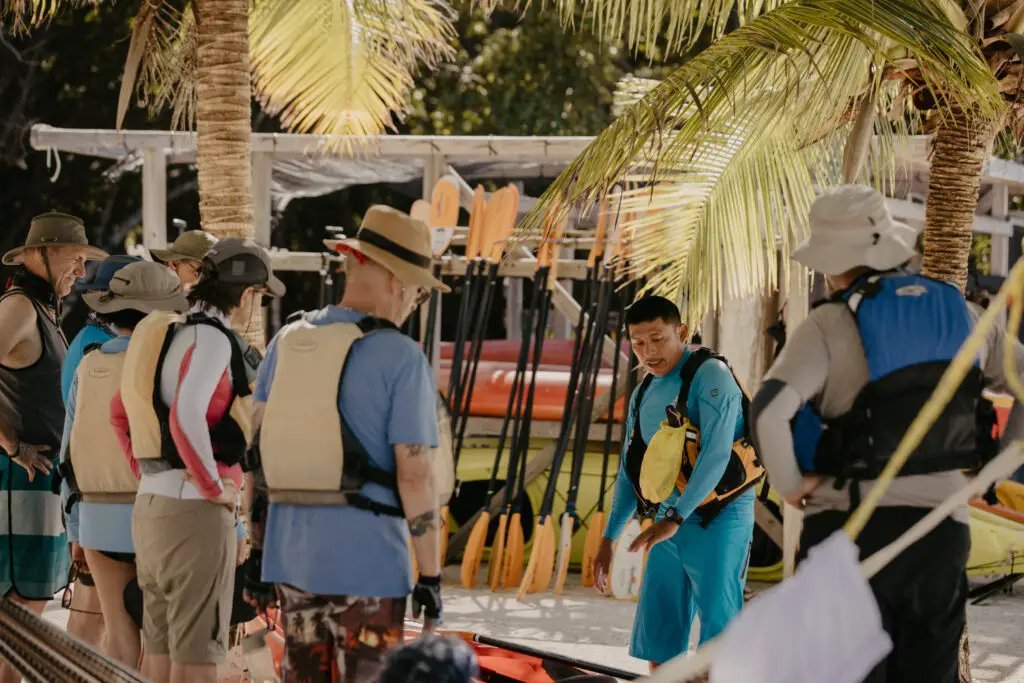
The kayak noses away from the beach. The water is clear enough to see pale sand beneath you, and the reef is a shifting line of turquoise ahead. Your guide shows you a technique where you punch out your forward stroke and a short twist to your torso, and suddenly you are gliding your boat through the turquoise Caribbean waters. Your guide calls back an easy correction to your paddle stroke. A breeze lifts off the sea. Your shoulders are working.
It looks wonderful in the photographs. It also looks active. That leads many future guests to ask a very sensible question: Could I actually do this?
First the short answer
No experience necessary. You do not need to be an elite athlete, an experienced kayaker or a lifelong snorkeler. Island Expeditions recommends a medium level of fitness, and the guides will teach you all the basics before we head out together. At the same time, this is an active holiday. You will be outdoors in the sun, getting in and out of boats or kayaks, moving through water and using muscles that may not be part of your everyday routine.
The right question is not, “Am I athletic enough?” It is, “Can I enjoy moderate activity, listen to my body and choose a trip whose rhythm suits me?” For many travellers, the answer is yes.
How paddling actually feels
Paddling is less about strength than most beginners expect. A relaxed stroke, a twist in the torso, a steady rhythm and good positioning do more than trying to muscle the kayak across the lagoon. Your guide begins with the essentials on dry land and in calm water, then helps you build confidence as you go.
Some mornings the sea may look like polished glass. On other days, wind or current adds effort. You may feel your shoulders, back and core working, especially if kayaking is new to you. Tandem kayaks allow two people to share the paddling, and some are fitted for kayak sailing, which can turn the return journey into a wonderfully breezy ride.
It is not a race. The pleasure is in looking up: a frigatebird overhead, a ray slipping beneath the hull or a strip of white sand appearing beyond the reef.
How snorkeling actually feels
Snorkeling can be surprisingly restful once you are floating comfortably. The water supports you while the reef unfolds below—patch reefs, coral heads, bright fish, sea fans moving with the surge. But the first few minutes can feel unfamiliar. Breathing through a snorkel, adjusting a mask and trusting yourself in open water are learned skills.
No previous snorkeling experience is necessary on Island Expeditions’ guided trips, although general comfort in the water is strongly recommended. Guides help fit your equipment, begin with an introduction in shallow water before moving to deeper sites when the group is ready.
A snorkel outing may involve swimming gently, drifting with the water or climbing back into a boat or kayak. Salt, sun and excitement can be tiring even when the activity itself feels easy. That is normal. The goal is not to cover the most distance; it is to finish wanting to see one more reef tomorrow.
Where recovery fits into the day
Basecamp days usually have a natural pause between a morning activity and an afternoon option. You return to camp, rinse off the salt, eat lunch and settle into the shade. Wet gear dries in the sun while conversation slows and someone inevitably finds a hammock.
That break matters. It gives shoulders a rest, lets you rehydrate and makes the second half of the day feel inviting rather than relentless. Some guests join every outing. Others choose one main activity and spend the rest of the day reading, walking the caye, watching birds or simply listening to the sea.
At Glover’s Reef and Lighthouse Reef basecamps, guided sessions are optional. Staying back is not failing the itinerary. It is one of the ways you make the trip your own.
What optional really means
Optional means you can decide that a hammock is the better choice that afternoon. It also means being honest with your guide before you are tired, cold or uncomfortable. Guides can explain the expected conditions and help you choose the outing that fits your energy.
It does not mean every itinerary requires the same effort. A basecamp trip offers more freedom to opt in and out. A journey-style trip that moves between locations may include longer or more continuous paddling. The activity rating and daily itinerary matter, and a trip planner should be able to tell you plainly what a particular departure will ask of you.
How to prepare without overtraining
You do not need an expedition training program. Regular walking, cycling or swimming can build the steady fitness that helps most. A little upper-body and core work makes paddling feel more familiar, while gentle mobility for the shoulders and hips can make getting in and out of a kayak easier.
If snorkeling is new, try a mask and snorkel in a pool or calm water before the trip. Learning that breathing rhythm at home lets your first Belize snorkel be about the fish rather than the equipment. Sun protection, hydration and good sleep are just as important as fitness in a tropical environment.
A simple readiness check
- You are comfortable being active for part of the morning and afternoon.
- You are generally comfortable in the water, even if your snorkeling skills are new.
- You can get into and out of a kayak or small boat with guidance or assistance.
- You are willing to speak up, rest when needed and skip an activity without feeling guilty.
- You are curious about nature and comfortable with a schedule shaped by weather and water.
If a medical, mobility or water-confidence concern is making you hesitate, talk with your healthcare professional and an Island Expeditions trip planner before booking. A candid conversation is far more useful than a generic reassurance.
So could you do this?
Quite possibly. If you have a reasonable base of fitness, feel generally comfortable around water and like the idea of being active without having to prove anything, a Belize reef adventure may be much more achievable than it first appears.
You may finish the day pleasantly tired, with salt in your hair and a few newly discovered muscles. Then you eat a good dinner, watch the stars come out and sleep with the sound of the Caribbean beyond your tent-cabana.
By morning, the reef is waiting again—and you get to decide how you would like to meet it.
Find the trip that fits you
Explore our Belize adventures or speak with a trip planner about activity level, water confidence, recovery time and the differences between itineraries. We would rather help you choose the right trip than simply sell you the most active one.